Cumbria is not a theme park with a lake in the middle. It is a working county: farms, fell flocks, lanes built for carts and horses, and villages where people live all year round, not just in July. Most visitors understand this instinctively. The friction, when it happens, comes from small things — a car left in a passing place, a gate swinging open, a dog loose near ewes in lamb.
None of it is complicated, and almost all of it is just consideration with a bit of local context. Here is how to move through the county so that the people who live here are glad to see you next time.
Single-track roads are the thing visitors underestimate most. They were never designed for modern traffic, and they are how people get to work, to school and to the vet.
The basics: keep left, and use the passing place nearest you rather than expecting the other driver to reverse two hundred yards. If you are heading downhill, giving way to traffic coming uphill is the usual convention, and it is far easier for a car to tuck into a passing place than for a tractor to. When someone does pull over for you, lift a hand as you pass. That wave is not decorative — it is the whole social contract of a Cumbrian lane.
Two habits cause most of the trouble. Never park in a passing place, even for five minutes with the hazards on; you have just blocked the road for everyone behind you. And do not stop in the middle of the carriageway to photograph a view. Pull into a proper layby, a car park, or a wide verge that is clearly not going to churn into mud.
Give them room. Slow right down, wait until it is genuinely clear, and pass wide and quietly. Revving past a nervous horse on a narrow lane is how accidents happen, and no view is worth it.
Leave gates as you find them. If it was closed, close it; if it was tied open, leave it that way — there is usually a reason involving livestock that you cannot see yet. Use the stile or the gap rather than climbing a dry stone wall. Those walls are somebody's fence, they cost real money to repair, and loose stones are how they start to fail.
Footpaths across farmland are yours to use. The field is not. Stick to the line of the path, keep to the edge of crops rather than cutting diagonally through them, and accept that a path can be temporarily diverted around a bull or a field of young stock. Signs are there for a reason.
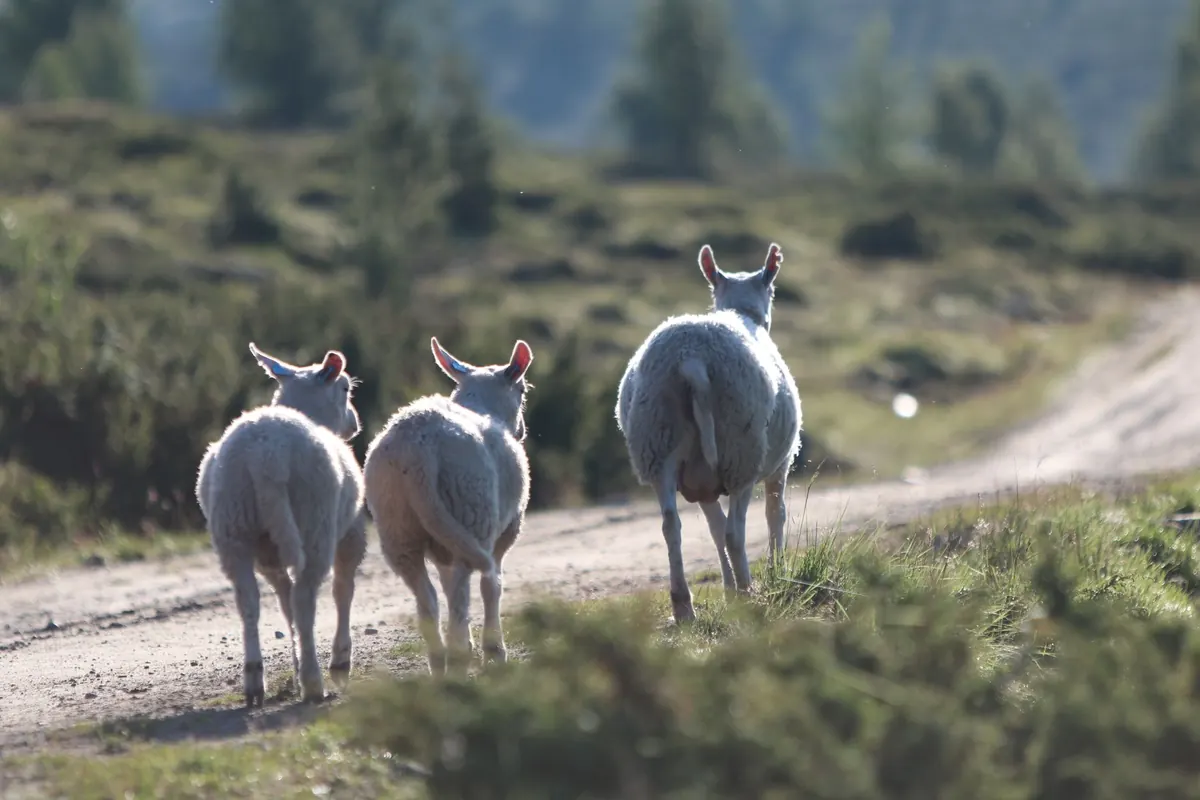
Fell sheep are not pets and they are not tame. They do not understand cars, roads or picnics, and they will stand in the middle of the lane until they decide otherwise. Slow down, be patient, and drive around them only when it is safe.
In spring, ewes with lambs are protective and easily stressed. Keep your distance, keep children from approaching, and never feed anything to stock — bread, apples and crisps do real harm. If cattle with calves move towards you, do not run. Walk away calmly and put distance and a fence between you.
The village you are admiring is somebody's ordinary Tuesday. Keep voices and car doors quiet early in the morning and late in the evening. Do not block driveways, gateways or the single road through the middle while you check your phone. If there is a car park, use it, even when you are only popping into the shop for ten minutes.
Support what is there. The village shop, the pub, the café and the filling station are not scenery either — they are the infrastructure that keeps these places viable through the winter. A coffee and a chat does more good than another photograph.
Do not light fires and do not take disposable barbecues onto the fells, the shorelines or the commons. Dry grass and peat burn fast and unpredictably, and a scorch mark on a fell can take years to recover. If you want a fire, use a campsite that allows one.
Wild camping is not a right in England. You need the landowner's permission, and asking first is the whole point — many farmers will say yes if you are polite, self-contained and gone by morning. Otherwise, book a campsite. Take every piece of litter home, including fruit peel, bottle caps and the wrapper that blew out of your pocket. Leave the stones where they are: stone stacks and rearranged rocks damage the fragile ground and the look of a place.
Fell weather changes quickly, and a mild valley morning says nothing about the tops. Carry a map and a compass or a charged device with an offline map, waterproofs, water and something warm. Tell someone your route and your rough return time. Phone signal is patchy at best, so do not build a plan around it.
If something goes wrong, call 999 and ask for mountain rescue. They will come, whatever the hour, and they would far rather be called early than late.
One practical note: after walking through long grass or bracken, check yourself for ticks. If you feel unwell in the days afterwards, speak to a pharmacist or your GP and mention where you have been.
You do not need to memorise a rulebook. You need four habits:
Do that, and Cumbria will treat you well. You will get the wave from the farmer, the nod from the fell runner, the pint poured without a side order of suspicion. That is the trade: the county gives you its best days, and you give it the small courtesies that keep it worth visiting.
Photo: Nihongraphy / Pexels