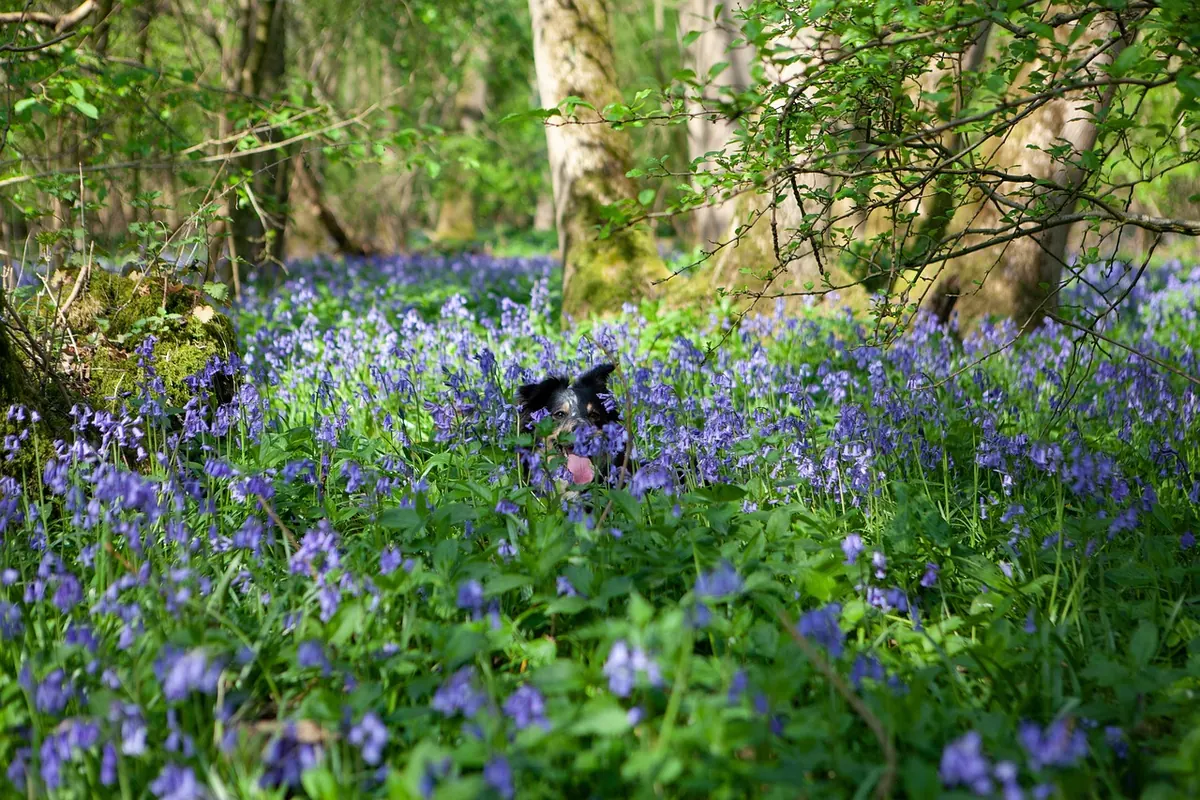
There is a fortnight or so each spring when the woods under Cumbria's fells turn from brown to blue, and it is over before you have quite got used to the longer evenings. Miss it and you wait a year. Catch it and a short walk becomes the best hour of your spring.
The good news is that Cumbria has more bluebell woods than most people realise, and the best of them are not far from a car park or a village pub. The less good news is that timing matters more here than almost anywhere in England, and the popular spots are popular for a reason.
Forget a single date. In Cumbria the bluebell season rolls north and uphill through late April and May, and a cold spring can push the whole thing back by a fortnight.
The earliest displays tend to be in the low, sheltered woods in the south of the county, around Kendal, Levens and the Lyth and Kent valleys, plus the mild coastal fringes. By the first half of May the woods around the central lakes are usually at their best. Woods high on the fell sides, or on slopes that face north and stay cold, hold on later, sometimes into the first days of June.
Bluebells flower early on purpose. They need light, and they get it before the oak and ash canopy closes overhead and shuts them down for another year. That is why a wood can look spectacular one week and green the next. If you have a free day, ring a local tourist information point or check a National Trust or Cumbria Wildlife Trust page for that wood before you set off. And if you only get one walk, aim for a warm, still morning: the scent is one of the reasons people go back every year.
This is the one everyone means when they talk about bluebells in Cumbria. The slopes of Rannerdale, the little valley tucked between Buttermere and Crummock Water, carry a blue haze in May that photographs badly and looks far better in person.
The walk is short but not flat. From the Buttermere end of the valley, a path follows the stream and then climbs onto the lower slopes of Rannerdale Knotts, where the flowers run in sheets between outcrops of rock. It can be steep and greasy after rain, and the ground is thinner than it looks.
Because it is well known, it gets busy, and the parking at Buttermere is limited at the best of times. Arrive early, walk in from the village, and accept that on a sunny Sunday in mid-May you will not be alone. If that puts you off, come back on a weekday evening instead.
Holme Wood, on the quieter south-eastern shore of Loweswater, is the best answer to Rannerdale's crowds. National Trust woodland, old oaks, bluebells underneath them, and the lake showing through the trunks at intervals. It feels like a working wood rather than a visitor attraction.
Paths run along the shore and up through the trees, and you can make the walk as short or as long as you like. Parking is roadside and genuinely limited, so park considerately in the village or at the Scalehill end and walk in. Do not block gates, and do not park on verges that are already soft from spring rain.
Cumbria is well supplied with bluebell woods, and the following are all worth a look if the famous ones are heaving:
Most of the bluebells you see in Cumbria's older woods are native, and the difference is worth knowing. Native bluebells (Hyacinthoides non-scripta) are deep violet-blue, carry their flowers on one drooping, one-sided spike, have narrow leaves, creamy pollen and a strong, sweet scent. Spanish bluebells, the garden escapees, stand upright, are paler and more open, have broad leaves, blue-green pollen and very little scent. Plenty of plants are hybrids, so do not worry too much about a definitive answer. Just notice the scent and the droop.
Bluebells are tougher than they look and more fragile than you would think. The bulbs sit shallow in the soil, and a season of feet and bike tyres across a colony can do damage that takes years to undo.
Rule of thumb: if you would not want twenty other people following your exact route through the flowers, choose another route.
Wear boots or sturdy shoes. Even a short bluebell walk will involve mud or wet grass, and the slopes at Rannerdale are slick after rain. Take a waterproof layer whatever the forecast says, and carry water.
Take a paper map or a downloaded one, because signal is patchy in the western valleys. And check yourself for ticks afterwards if you have been through long grass or bracken; if you find one and are unsure how to deal with it, ask a pharmacist or your GP rather than guessing.
Finally, plan the day around the walk, not the other way round. Buttermere, Loweswater, Rosthwaite and Eskdale all have places for a late lunch or a pint, and the best bluebell walks finish within reach of a bench. Go in May, go early, keep off the flowers, and you will have the sort of morning that makes the rest of the year's weather feel worth it.
Photo: TheOtherKev / Pixabay